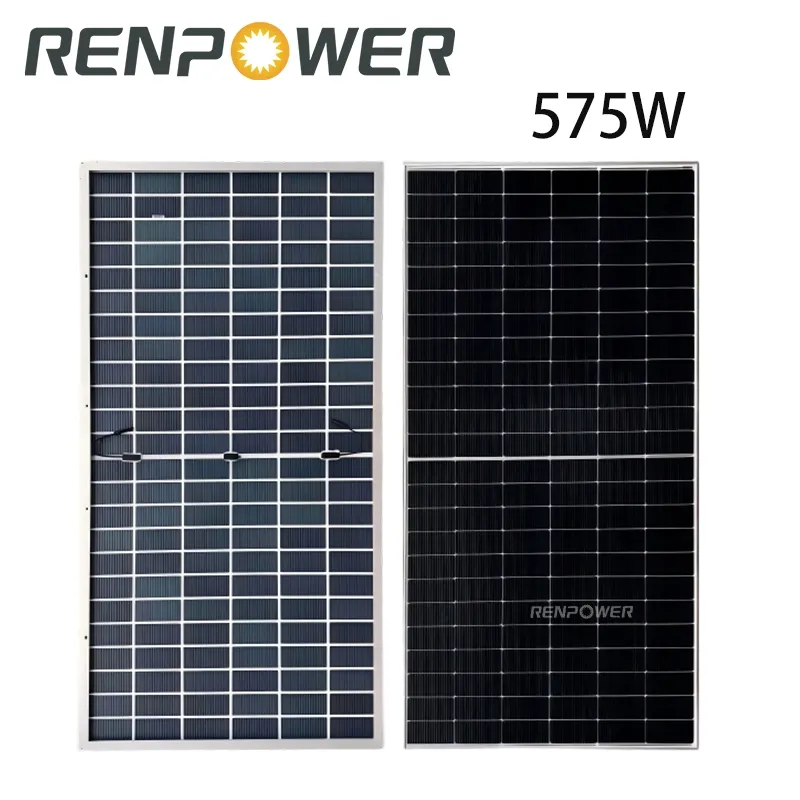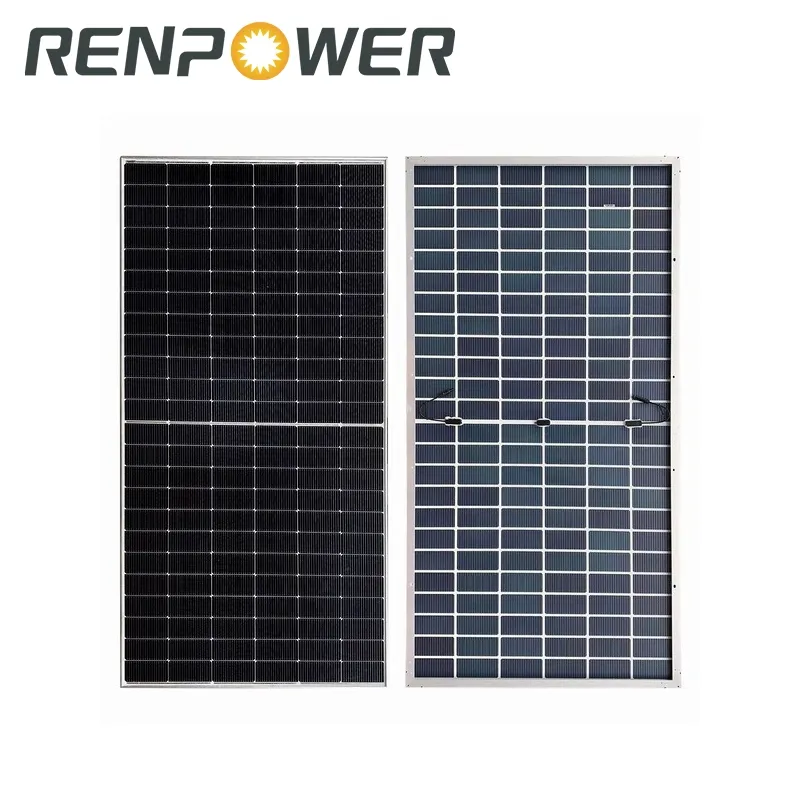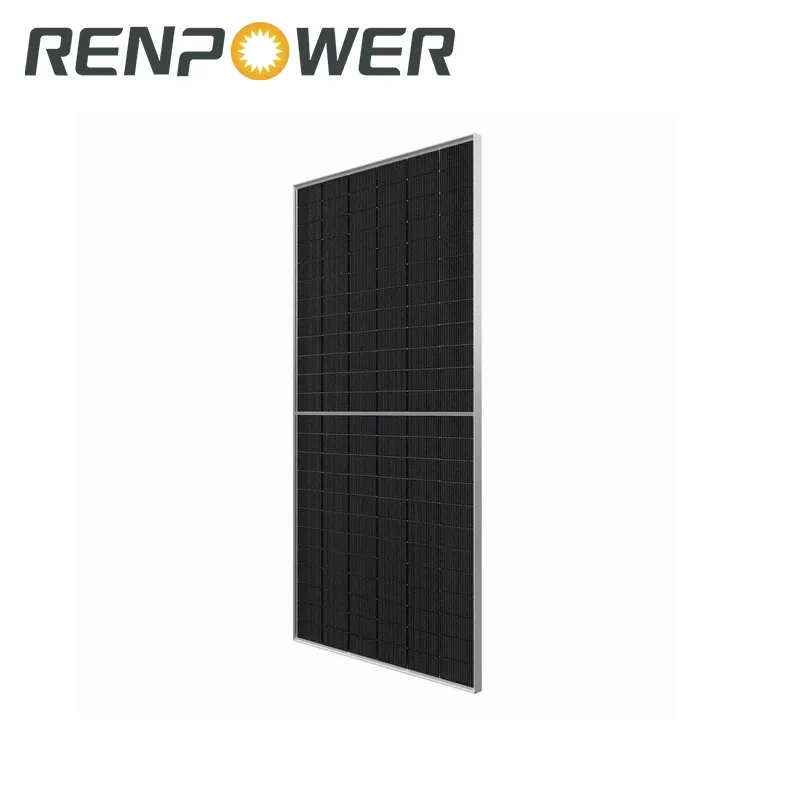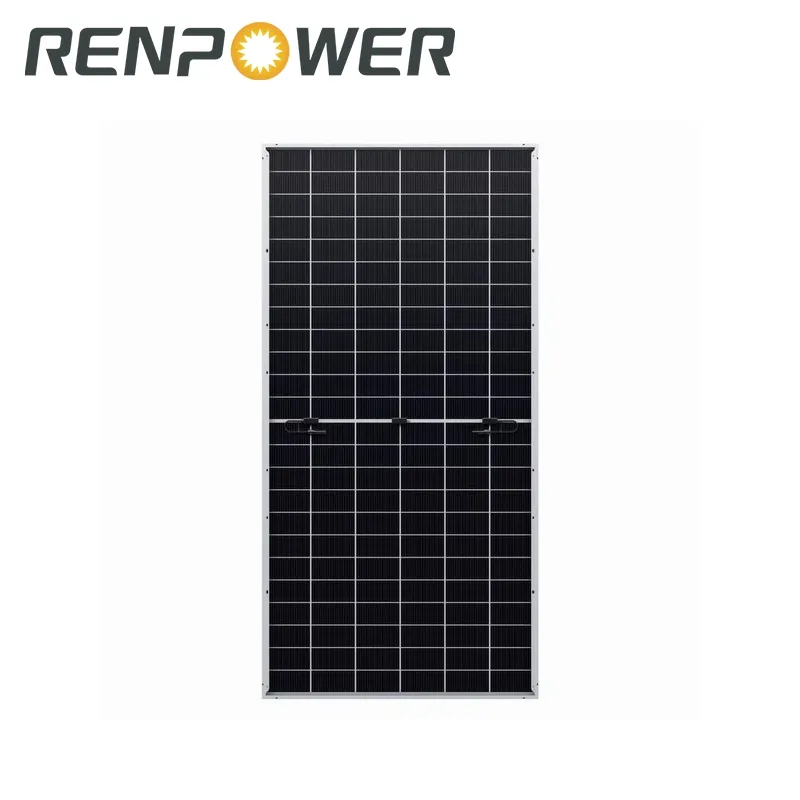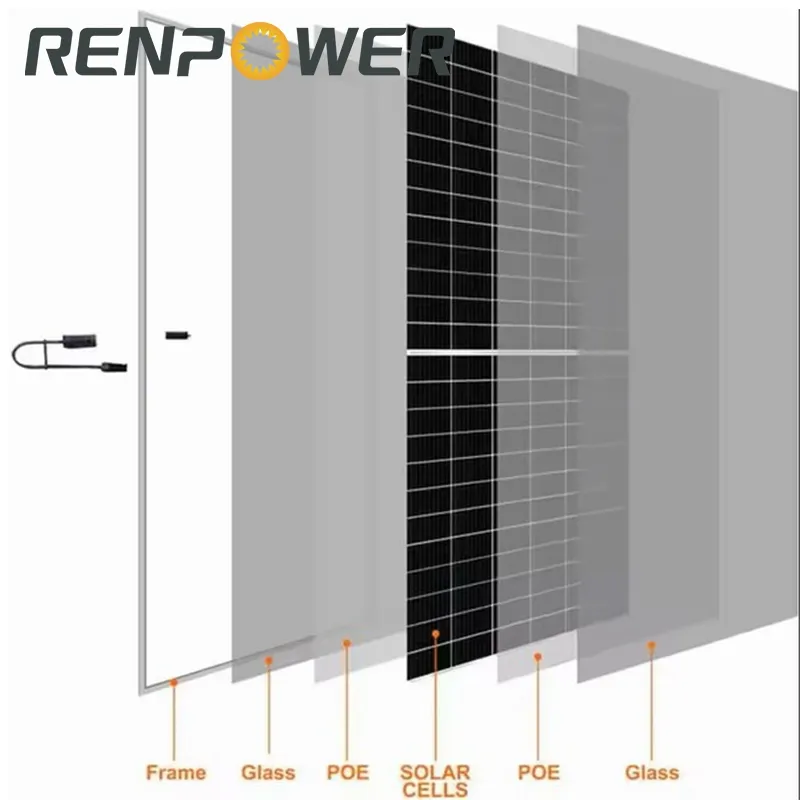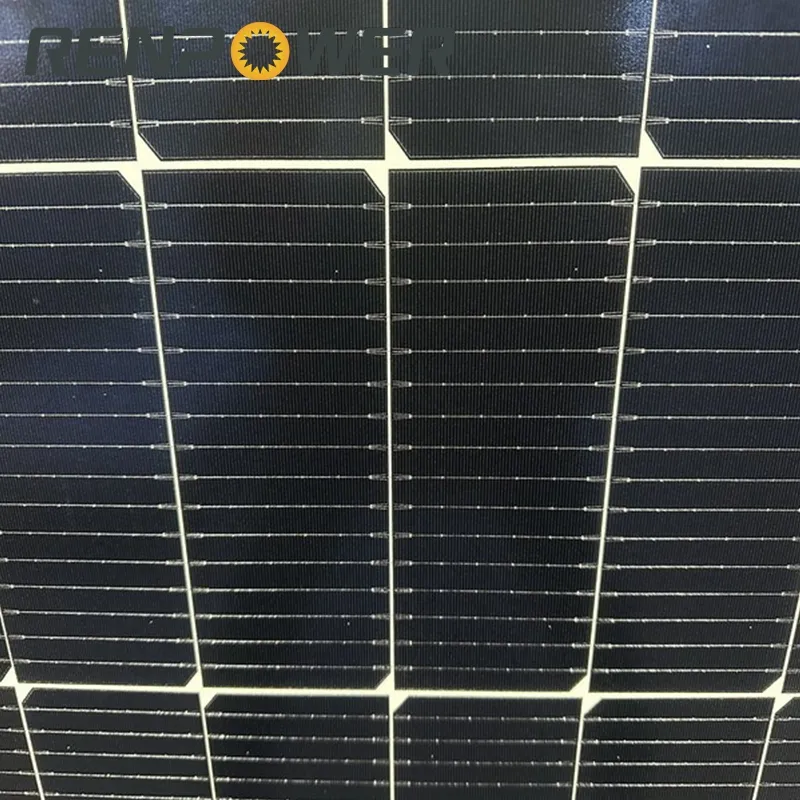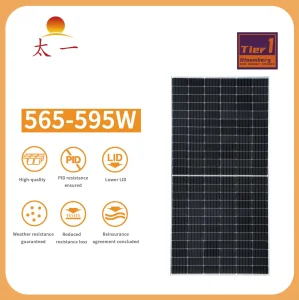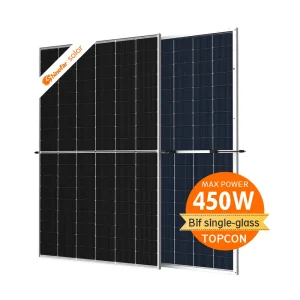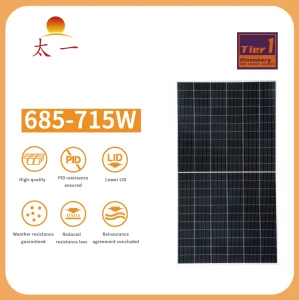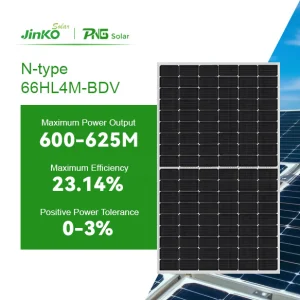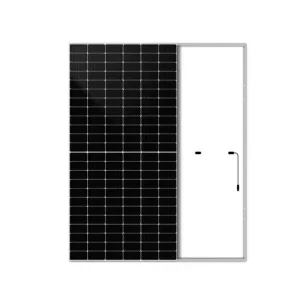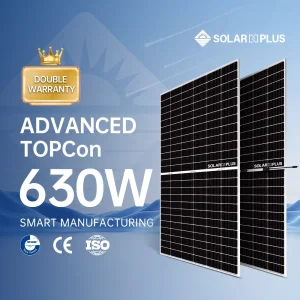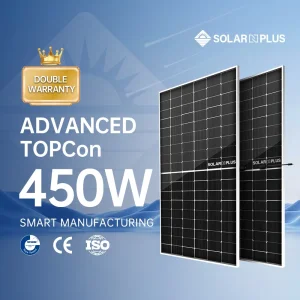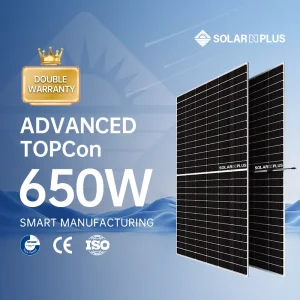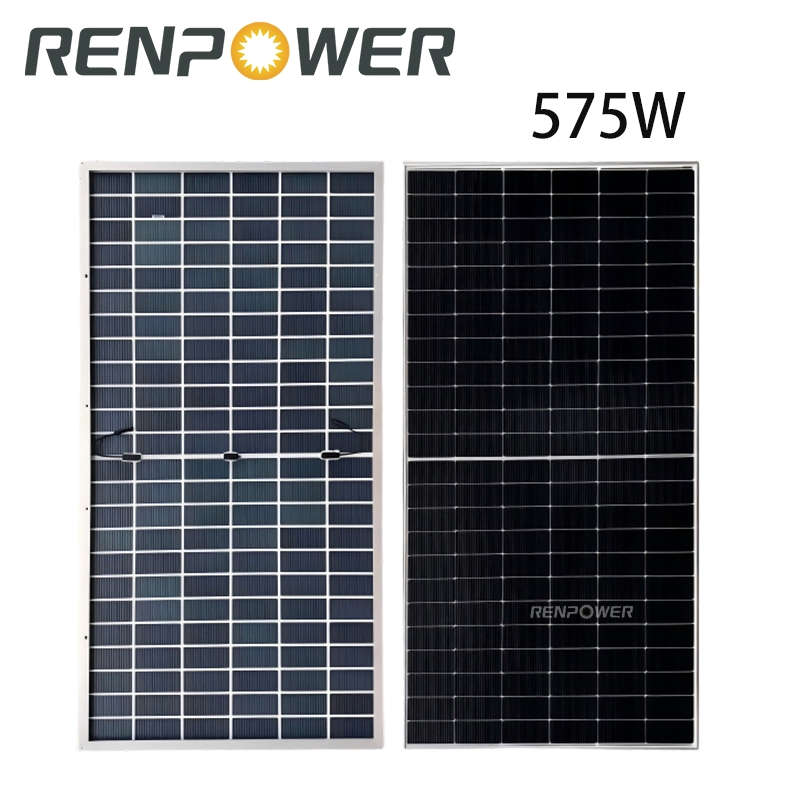
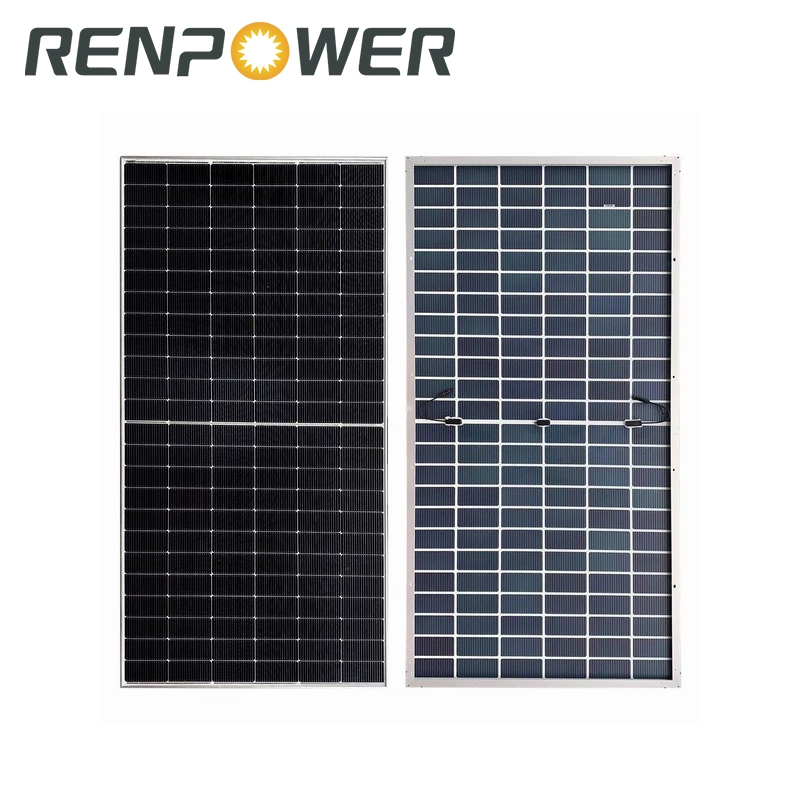
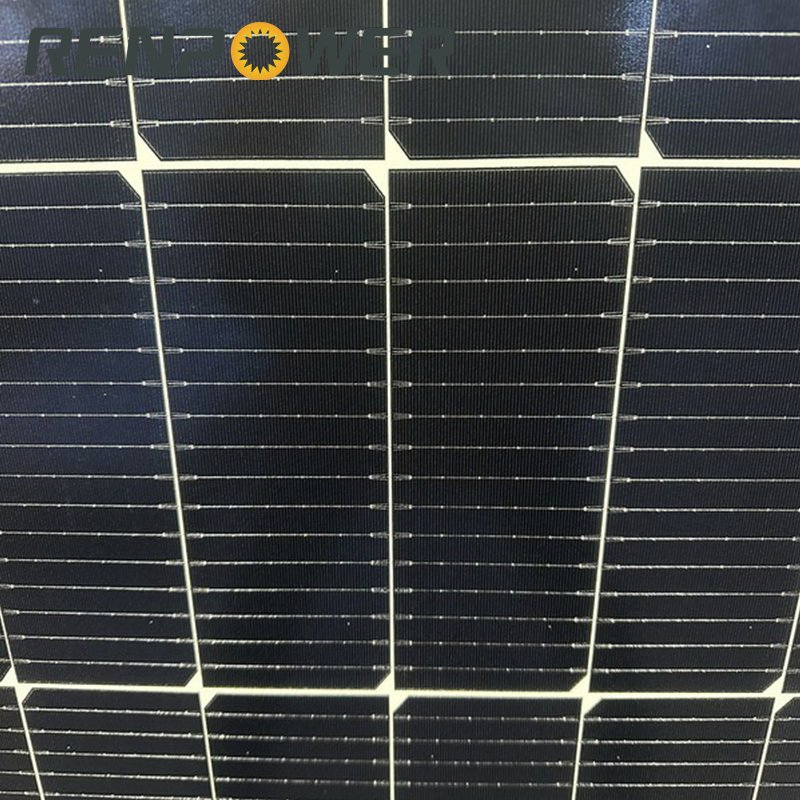
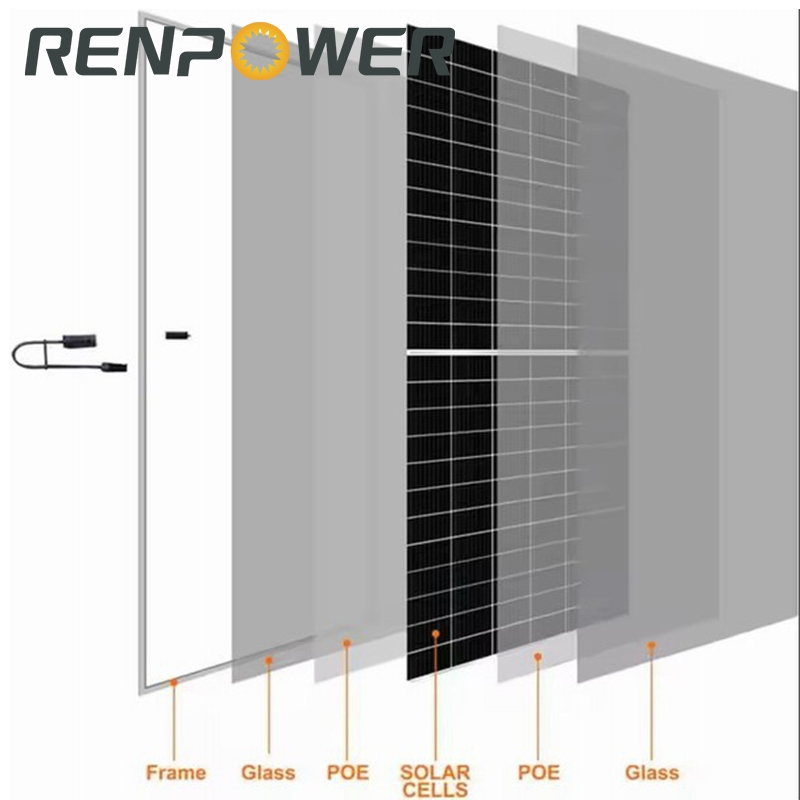
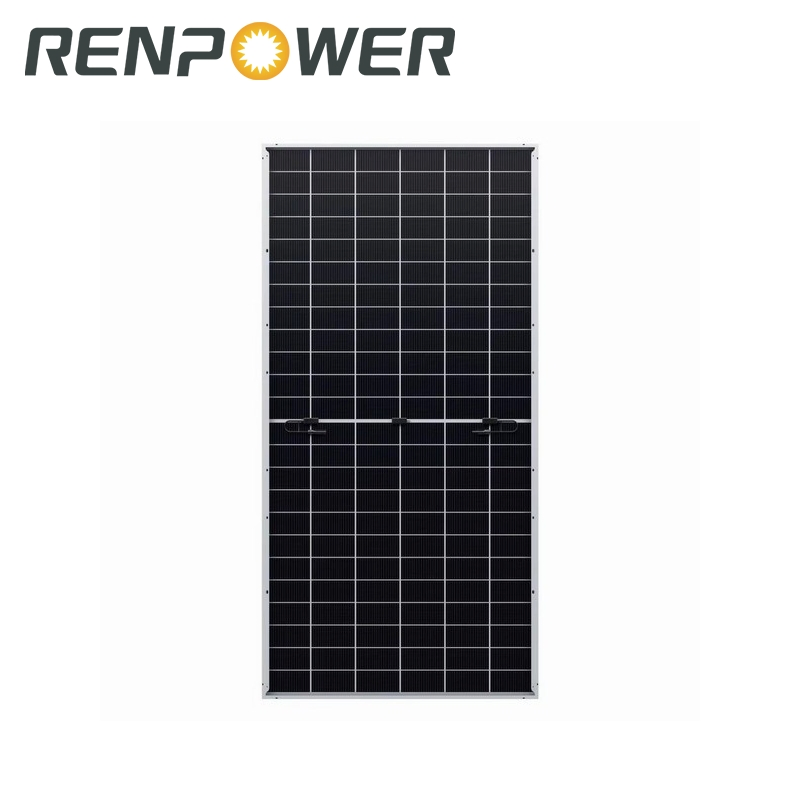
N type MBB cell with new circuit design for lower internal resistance loss.
Special cutting and soldering technology leads to lower hotspot risk.
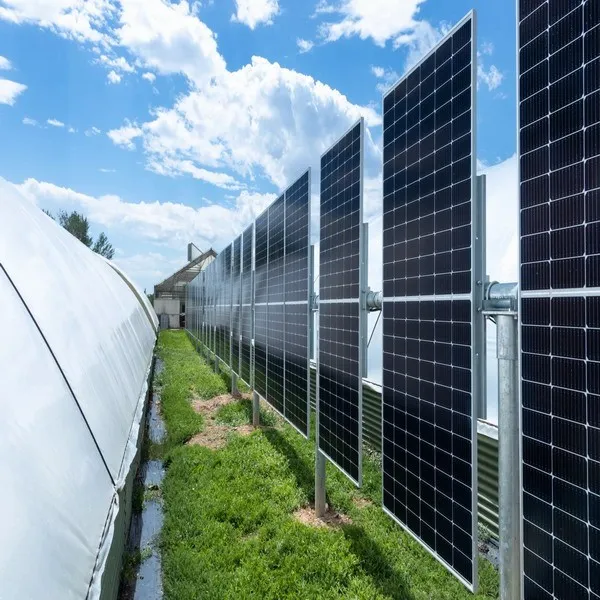
Bifaciality > 80%, effectively improves backside power generation.
Higher performance under low light environment conditions.
Ensure the attenuation probability caused by PID phenomenon minimized.
Product Parameters
Power(Pmax)
Voc
Isc)
Vmp
lmp
Size(MM)
Weight(KG)
5W
24.12V
0.27A
20.16V
0.25A
280*190*17
0.9
10W
24.12V
0.53A
20.16V
0.50A
400*200*17
1.2
20W
21.12V
1.21A
18.56V
1.08A
360*390*25
1.9
30W
21.12V
1.82A
18.56V
1.62A
470*390*25
2.3
50W
23.76V
2.70A
20.88V
2.39A
520*590*25
3.6
100W
27.72V
4.63A
24.36V
4.11A
930*580*30
6.2
200W
26.40V
9.71A
23.20V
8.62A
1280*770*30
10.7
410W
47.52V
11.84A
41.76V
10.78A
2094*1038*35
22.6
575W
51.44V
14.26A
42.94V
13.39A
2279*1134*35
30.0
680W
49.47V
17.48A
39.40V
16.41A
2384*1303*35
38.5
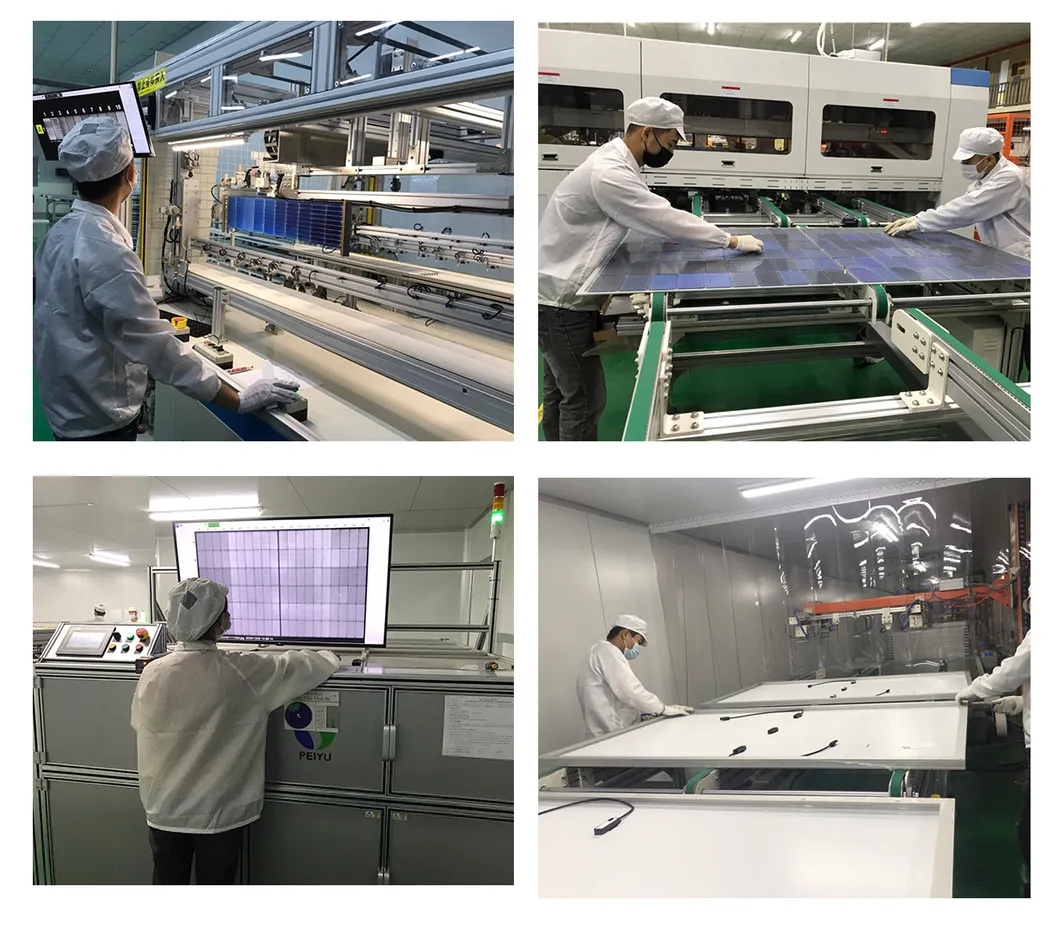
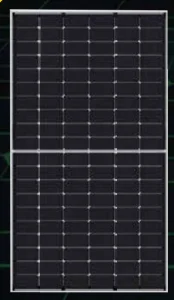
Detailed Photos
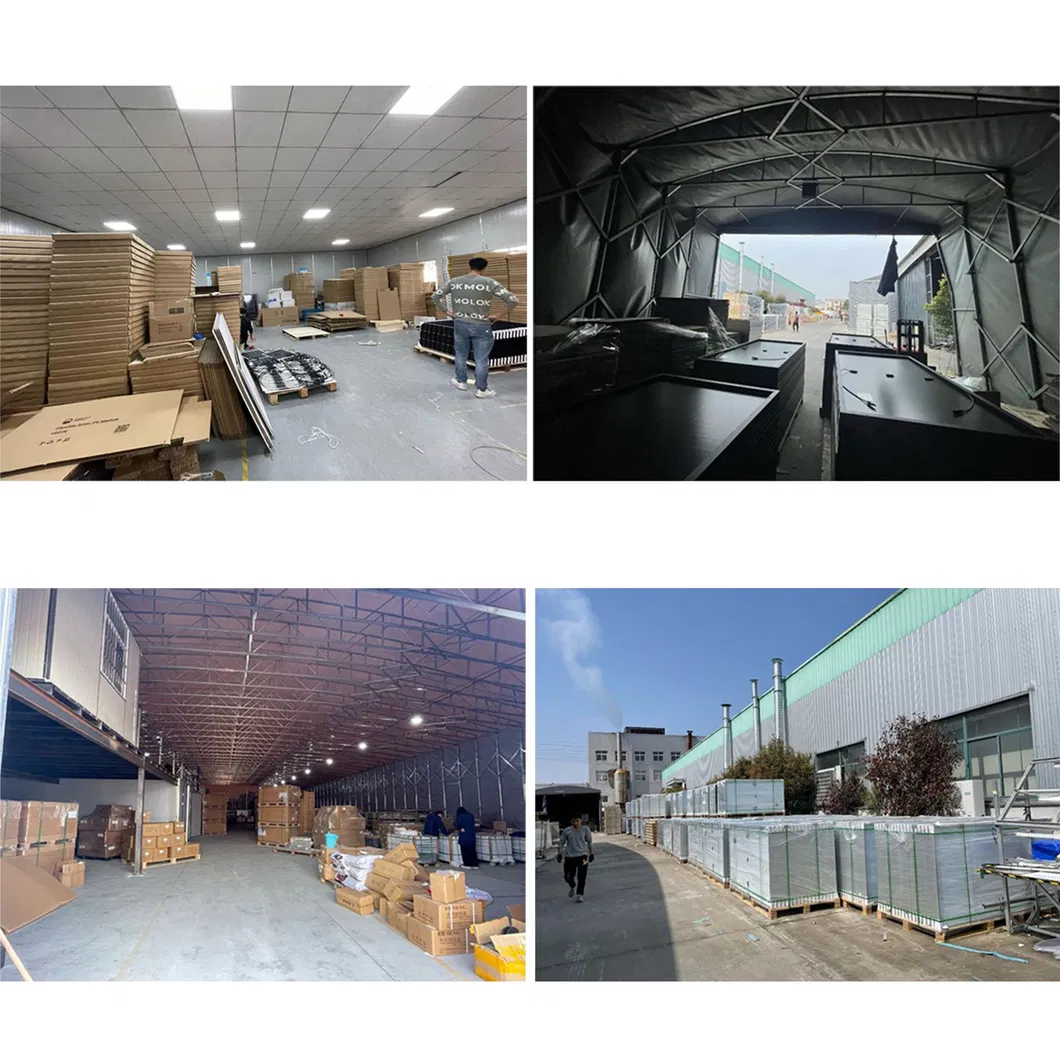
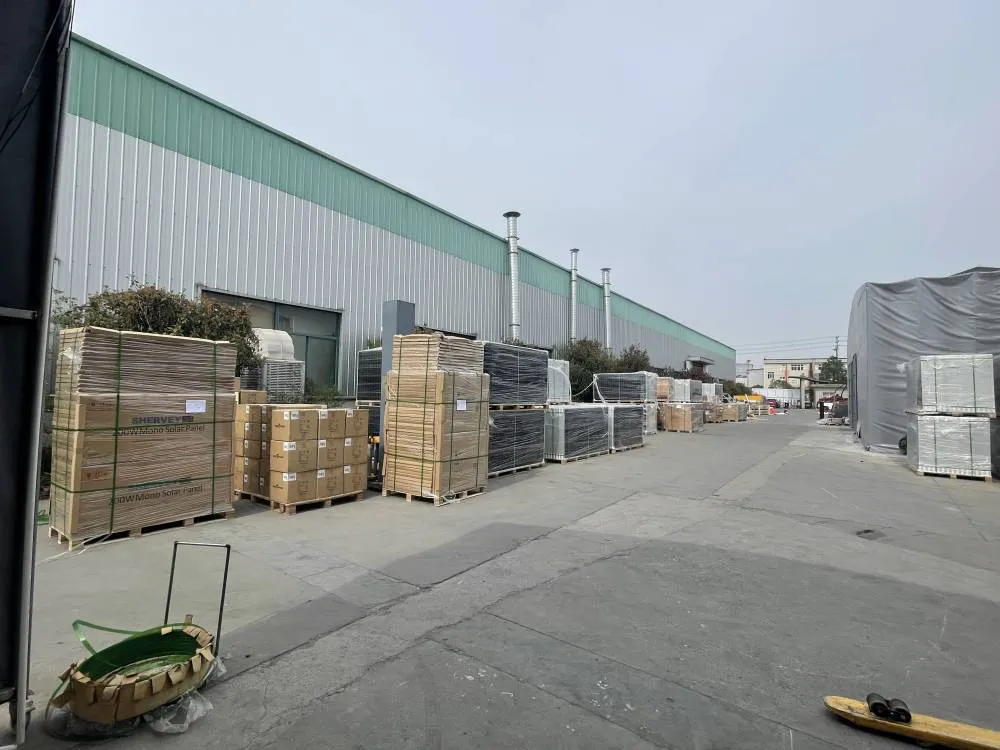
Packaging & Shipping
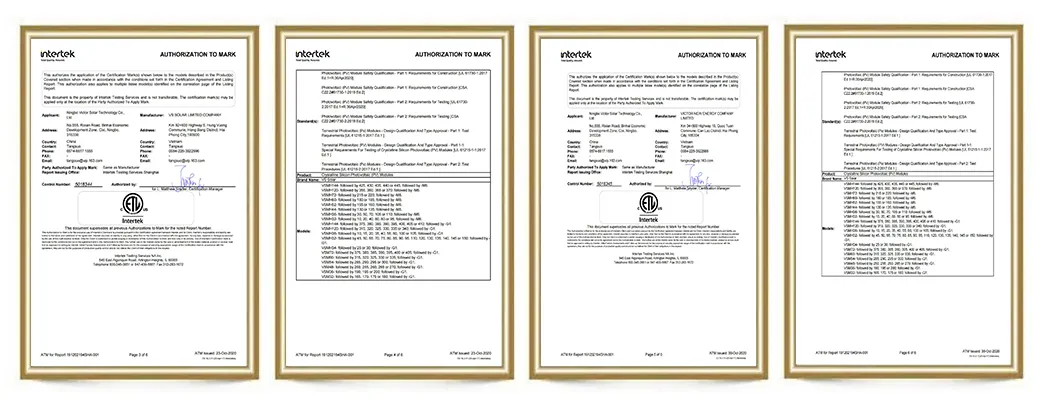
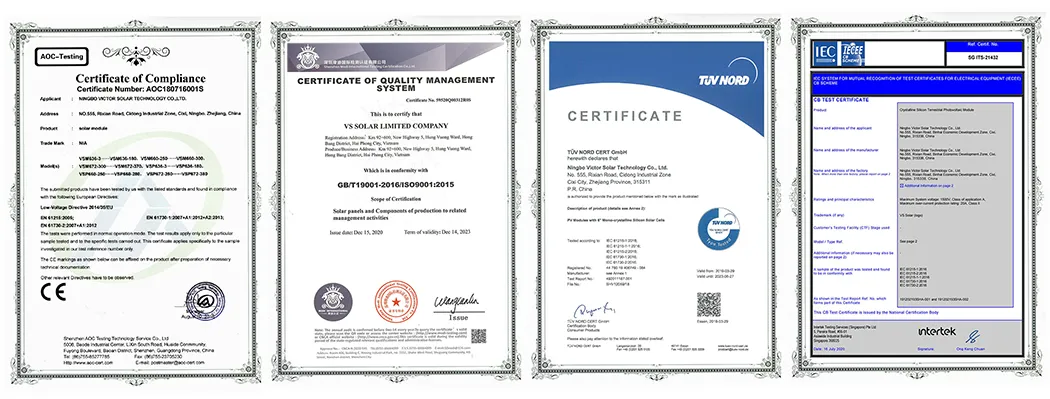
Certifications
Frequently Asked Questions
Do these panels have brackets attached to the roof?
The component itself is equipped with a junction box connector output voltage. If you need to access the off-grid system, you need to purchase additional appropriate wiring and mounting brackets separately.
Can this solar panel accommodate 12V/24V/36V/48V batteries?
It can be used, but must be connected to a controller. When selecting the controller, it is necessary to adapt the maximum component input power that the controller can access.
How many kilowatt hours can this solar panel produce in a day?
In the case of STC (Standard Test Conditions), the power generation is the product of standard power and sunlight time (W*H). Actual output depends on geographic location and weather.
What is the difference between high power modules and low power modules?
The primary difference is cell efficiency and output. High power modules require fewer units to meet total demand, simplifying installation and wiring while providing higher open-circuit voltage.
What is the advantage of N-type Topcon technology?
N-type Topcon cells offer higher efficiency, lower temperature coefficients, and better performance under low-light conditions compared to traditional P-type cells.
Are these panels durable for extreme weather?
Yes, the modules are designed with high-quality monocrystalline silicon and tempered glass to withstand standard environmental stresses including wind and snow loads.