Zylo Solar Zylo Solar

What Is an Off Grid Solar System and How Does It Work?

Time:2026-10-03 Author:Sienna
0%

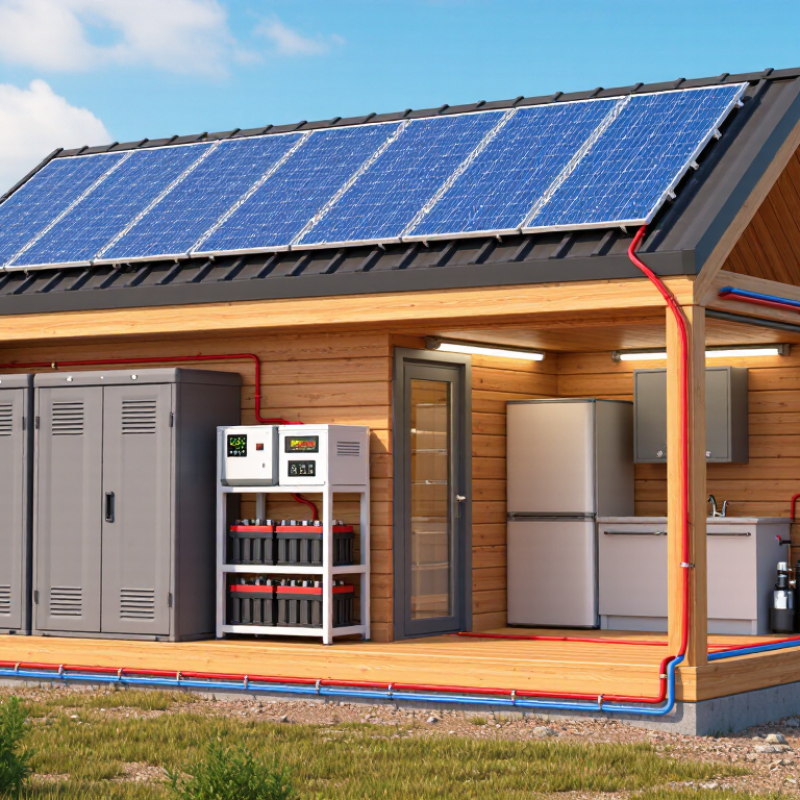
What is an off-grid solar system and how it works is a practical question for anyone seeking reliable electricity beyond the utility grid. Unlike a grid-connected system, it operates independently, using solar panels, batteries, a charge controller, and an inverter. Panels capture sunlight and produce direct-current electricity. The controller manages battery charging. The inverter converts stored power into usable household electricity.

The process sounds simple. It is not always simple. A sunny afternoon may fill the batteries, while several cloudy days can reduce available power quickly. A small cabin might run LED lights, a refrigerator, and a water pump. However, heating appliances can consume the battery bank within hours. Proper system design therefore depends on local sunlight, daily energy use, battery capacity, and backup planning. Measured data matters more than optimistic estimates.

In practical installations, experienced technicians calculate peak loads and seasonal production before selecting equipment. They also include safety disconnects, suitable wiring, ventilation, and weather-resistant enclosures. Battery performance changes with temperature and age. Maintenance remains necessary. Dusty panels, loose connections, or poor settings can reduce output.

No system is perfect. Energy needs often grow after installation. A homeowner may add tools, appliances, or internet equipment later. This guide explains the main components, energy flow, sizing considerations, costs, and limitations of off-grid solar power. It also highlights common design mistakes, because reliable independence requires more than placing panels on a roof.
What Is an Off Grid Solar System and How Does It Work?

What Is an Off-Grid Solar System? Core Components and 15–23% PV Efficiency

An off-grid solar system produces and manages electricity without a utility connection. Its core parts are photovoltaic modules, a charge controller, batteries, an inverter, and protective wiring. Sunlight becomes direct current in the modules. The controller regulates charging, while the battery stores energy for night use or cloudy weather. The inverter converts stored electricity into alternating current for lights, pumps, and appliances.

PV efficiency matters. The Fraunhofer Institute’s Photovoltaics Report shows that commercial crystalline-silicon modules commonly achieve roughly 20–23% efficiency, while older or lower-cost modules may perform near 15–20%. This figure describes sunlight conversion, not total household output. Heat, dust, cable resistance, shading, and battery losses reduce real performance. The International Energy Agency Photovoltaic Power Systems Programme also identifies system losses and storage requirements as key design factors.

A practical system begins with an honest load estimate. A small cabin using 4 kWh daily may need several kilowatts of modules, depending on sunlight and seasonal demand. Batteries should cover essential loads, not every imaginable appliance. At noon, the controller may charge the battery while powering a water pump. After sunset, the inverter draws stored energy. Real installations are less tidy than diagrams. A design can look correct on paper and still disappoint during a cloudy week. NREL’s renewable-energy assessments emphasize measured solar resources, load profiles, and regional weather data before sizing equipment. Even then, users should allow a safety margin and review actual consumption after installation.

How Solar Irradiance, Loads, and Peak Sun Hours Determine System Size

What Is an Off Grid Solar System and How Does It Work?

An off-grid solar system produces and stores electricity without a utility connection. Solar panels convert sunlight into direct current, while an inverter supplies usable alternating current. Batteries preserve energy for evenings, cloudy periods, and short winter days.

System size depends on solar irradiance, daily loads, and peak sun hours. Irradiance describes sunlight power reaching a surface, measured in watts per square metre. Peak sun hours convert changing sunlight into equivalent full-sun hours. For example, a home using 3.6 kWh daily, receiving 4.5 peak sun hours, and experiencing 25% system losses needs about 1.1 kW of panels. This calculation follows the practical loss assumptions used in tools such as the National Renewable Energy Laboratory’s PVWatts guidance. Battery capacity needs separate planning. Two days of autonomy at 80% usable depth of discharge would require roughly 9 kWh nominal storage. The International Energy Agency Photovoltaic Power Systems Programme reported global solar capacity above 1.6 terawatts by the end of 2023, but local conditions still control off-grid performance.

Tips: Measure real loads before buying equipment. A refrigerator may use little energy daily, yet its compressor creates a sharp starting surge. Check winter irradiance, not only annual averages, using the World Bank Global Solar Atlas. Oversizing panels can reduce generator use, but it cannot fix careless load estimates. My own rule is simple: record every appliance for a week. Assumptions fail quietly.

What Is an Off Grid Solar System and How Does It Work? – How Solar Irradiance, Loads, and Peak Sun Hours Determine System Size

Illustrative residential off-grid sizing examples. Values are engineering estimates; actual designs should use local solar data, appliance specifications, and applicable electrical codes.
Design Parameter How It Is Used Low-Use Cabin Efficient Small Home Higher-Use Home
Daily energy demand Total electricity consumed in one day, calculated as appliance power × operating time. 2.0 kWh/day 5.0 kWh/day 10.0 kWh/day
Peak simultaneous load The highest expected load running at the same time; it helps determine inverter capacity. 0.8 kW 2.5 kW 5.0 kW
Short-duration surge load Motor-driven appliances may briefly require more power when starting. 1.6 kW 5.0 kW 10.0 kW
Design peak sun hours Equivalent hours per day at 1,000 W/m² of solar irradiance; use the seasonal value for the design month. 4.0 h/day 4.5 h/day 3.5 h/day
Solar irradiance reference Peak sun hours convert daily solar energy into an equivalent full-power solar period; actual irradiance varies with weather, angle, and shading. 1,000 W/m² reference 1,000 W/m² reference 1,000 W/m² reference
Overall system derating Accounts for temperature, dust, wiring, charge-control, inverter, battery, mismatch, and other conversion losses. 25% 25% 30%
Required PV array size Formula: daily energy demand ÷ (peak sun hours × system efficiency). 0.67 kW 1.48 kW 4.08 kW
Practical PV array selection Rounded upward to provide operating margin and accommodate normal production variation. 0.8 kW 1.8 kW 4.5 kW
Autonomy target Number of days the battery should support essential loads without sufficient solar production. 2 days 2 days 2 days
Usable battery energy Formula: daily energy demand × autonomy target; this is the energy available to loads, not the nameplate capacity. 4.0 kWh 10.0 kWh 20.0 kWh
Illustrative battery nameplate capacity Assumes approximately 90% usable capacity and 90% inverter efficiency; battery chemistry and temperature can change this value. 4.9 kWh 12.3 kWh 24.7 kWh
Recommended continuous inverter rating Should meet the expected simultaneous load with additional capacity for heat, aging, and future demand. 1.2 kW 3.0 kW 6.0 kW
Basic operating sequence Solar panels convert sunlight into DC electricity. A charge controller regulates battery charging, the battery stores energy, and an inverter converts DC electricity into AC electricity for household loads. Excess demand may require load management or a backup generator.
Key sizing note: A system designed with the lowest seasonal peak sun hours is more likely to meet essential loads during the least productive part of the year. Battery capacity and inverter surge capability must be checked separately from PV array size.

From DC to Usable Power: MPPT Controllers at 95–99% Efficiency

An off-grid solar system produces electricity without a utility connection. Solar panels generate variable direct current, or DC. Batteries store surplus energy for night-time use. An inverter then changes DC into usable alternating current for appliances, pumps, and tools.

The MPPT controller manages the critical transition from panel voltage to battery voltage. It continuously searches for the panel’s highest-power operating point. This matters because sunlight, temperature, and shading change throughout the day. Under suitable operating conditions, modern MPPT controllers commonly deliver about 95–99% conversion efficiency, based on published technical test data and certification literature. A small loss remains as heat inside the controller. It is easy to overlook.

NREL’s PVWatts documentation applies a default total system-loss assumption of 14%, covering wiring, inverter, mismatch, and other losses. That figure is not an MPPT rating, but it shows why every conversion stage deserves attention. The IEA PVPS Trends 2024 report recorded 456 GW of new photovoltaic capacity installed worldwide in 2023, expanding the practical knowledge base for solar design. Yet off-grid systems face harsher conditions than many grid-connected installations. Dust may cover a panel. A cold battery may accept current differently. Cable resistance can quietly reduce output. Real systems are less tidy. Designers should size cables carefully, verify controller performance near the intended voltage range, and record battery temperature. A 99% figure at one test point does not guarantee 99% efficiency at dawn, during heat, or under partial shade. That assumption can fail.

Battery Storage Explained: 80–95% Round-Trip Efficiency and Depth of Discharge

An off-grid solar system produces electricity without a utility connection. Solar modules feed a charge controller and inverter. The battery stores daytime energy for evening loads.

Simple in principle. Weather makes it less predictable.

Battery storage is where design quality becomes visible.

The U.S. Department of Energy’s Energy Storage Handbook places lithium-ion round-trip efficiency near 85–95% under suitable conditions. Round-trip efficiency measures energy recovered after charging and discharging. A 10 kWh charge may return roughly 8–9.5 kWh. Wiring, inverter losses, temperature, and aging reduce that figure. NREL’s Annual Technology Baseline uses efficiency assumptions that vary by technology and system design. Published numbers are not promises.

Depth of discharge, or DoD, shows how much battery capacity is used.

An 80% DoD limit makes a 10 kWh battery provide about 8 kWh. The remaining capacity creates a practical buffer. IRENA’s Electricity Storage and Renewables report links battery life with operating conditions, cycling, and DoD.

Repeatedly reaching 100% DoD can accelerate degradation, although chemistry and thermal control also matter.

A cold battery may deliver less energy than expected. So can an undersized inverter. Real installations are messier. Monitoring daily energy flows helps reveal those gaps before they become expensive.

Sizing Inverters, Protection, and Backup Capacity for Reliable 24/7 Power

What Is an Off Grid Solar System and How Does It Work?

An off-grid solar system produces electricity without a utility connection. Solar panels charge batteries through a charge controller. An inverter then supplies usable AC power to lights, pumps, and appliances. Reliable 24/7 power depends more on sizing than panel count.

Start with the largest continuous load, then add starting surges from motors, refrigerators, or well pumps. Select an inverter with enough continuous output and at least two to three times that capacity for short surges. Battery capacity should cover daily energy use, inverter losses, temperature effects, and several low-sun days. NREL’s PVWatts documentation applies a default 14% system-loss assumption, but remote systems may lose more through wiring, dust, conversion, and aging. NREL’s 2024 Annual Technology Baseline uses about 85% round-trip efficiency for lithium-ion storage. That figure is useful, not perfect.

Protection is not optional. Use correctly rated DC overcurrent devices, disconnects, grounding, surge protection, and battery isolation. Follow applicable electrical standards and local inspection requirements. A simple design mistake can leave a full battery unable to run a compressor safely. I have also seen people oversize panels while ignoring cable voltage drop. That wastes money and still causes shutdowns.

Tips: Record real appliance wattage with a meter. Test the system during cloudy weeks. Keep backup capacity for critical loads only. Review battery reserve settings every season. Generator backup can help, but fuel availability and maintenance are easy to underestimate. Reliability is designed through margins, testing, and honest load measurements.

What Is an Off-Grid Solar System and How Does It Work?

Typical 24-hour power profile used to size an inverter, battery bank, and solar array for reliable off-grid electricity.

This example represents a 24-hour household with an average demand of approximately 1.8 kW and a peak demand near 4.8 kW. Solar production reaches about 4.5 kW around midday, while the battery supplies power overnight and during periods when demand exceeds solar output. A practical design would use a continuous inverter rating of at least 6 kW, surge capacity for motor-starting loads, and approximately 24 kWh of nominal battery storage when one day of autonomy and an 80% usable depth of discharge are assumed.

FAQS

What is an off-grid solar system?

It generates and manages electricity without a utility connection. Solar modules produce direct current. A charge controller manages charging. Batteries store energy. An inverter converts stored power into alternating current for lights, pumps, and appliances.

What are the main components?

The core parts are solar modules, a charge controller, batteries, an inverter, and protective wiring. Each part affects system safety and performance. A weak inverter can limit useful appliance power.

How efficient are solar modules?

Commercial crystalline-silicon modules commonly convert about 20–23% of sunlight. Older or lower-cost modules may reach roughly 15–20%. This measures sunlight conversion only. Heat, dust, shade, and cable resistance reduce actual output.

How large should the solar array be?

Start by recording every appliance for one week. A home using 3.6 kWh daily may need about 1.1 kW of panels. That example assumes 4.5 peak sun hours and 25% system losses. Winter sunlight may require more capacity.

What are peak sun hours?

Peak sun hours represent equivalent full-sun hours during a day. They are not the same as daylight hours. A location might receive nine daylight hours but only four peak sun hours. Seasonal weather changes the result.

How much battery storage is needed?

Storage depends on daily loads, backup days, and usable depth of discharge. Two days of autonomy at 80% usable discharge may require about 9 kWh of nominal storage. Batteries should cover essential loads, not every possible appliance.

What does battery round-trip efficiency mean?

It measures how much energy returns after charging and discharging. A 10 kWh charge might deliver roughly 8–9.5 kWh later. Inverter losses, wiring, temperature, and aging reduce recovery. Published figures are not promises.

Why does depth of discharge matter?

Depth of discharge shows how much battery capacity is used. An 80% limit lets a 10 kWh battery provide about 8 kWh. The remaining capacity acts as a buffer. Reaching full discharge repeatedly may shorten battery life.

Can an off-grid system work during cloudy weather?

Yes, but output may fall sharply. Batteries provide energy during cloudy periods and after sunset. A cloudy week can expose careless sizing. Monitoring real consumption helps reveal whether the system needs more panels, storage, or fewer loads.

Conclusion

What is an off-grid solar system and how it works can be understood as a self-contained power solution that produces, stores, and delivers electricity without relying on the public grid. Solar panels convert sunlight into DC power, typically with PV efficiency around 15–23%. System size depends on local solar irradiance, daily energy demand, and peak sun hours, while seasonal changes and cloudy conditions must also be considered.

An MPPT charge controller adjusts the panel output to charge batteries efficiently, often achieving 95–99% conversion efficiency. Batteries then store energy for nighttime or low-sun periods, with practical round-trip efficiency of about 80–95%. Their usable capacity depends on depth of discharge, battery life, and required backup duration. Finally, an inverter converts stored DC electricity into usable AC power. Proper inverter sizing, fuses, disconnects, surge protection, ventilation, and backup capacity help maintain dependable 24/7 power while improving safety and system longevity.

Sienna

Sienna

Sienna is a skilled marketing professional with a deep expertise in our company’s core products and services. With a passion for innovation and detail, she plays a pivotal role in crafting insightful blog posts that not only highlight the unique features of our offerings but also provide valuable......