Zylo Solar
Choosing the 2026 best solar charge controller for batteries requires more than comparing prices or screen features. A controller regulates energy flowing from solar panels into a battery bank. It prevents excessive charging, limits unsafe voltage, and helps protect expensive storage equipment. Without that control, a bright afternoon can push a battery beyond its recommended charging range. Heat, shortened service life, and unexpected shutdowns may follow.
Solar educator Will Prowse describes the device simply: “A charge controller is the brain of your solar system.” That practical comparison matters. A quality controller continuously measures battery voltage and adjusts charging stages, including bulk, absorption, and float. MPPT models can also harvest more energy from changing sunlight than basic PWM units. In a real installation, the difference may appear when clouds move across the panels or when winter sunlight weakens.
Why use a solar charge controller with batteries? The answer is protection, efficiency, and better system control. However, no controller fixes an incorrectly sized battery bank, poor wiring, or loose terminals. I have seen specifications look excellent on paper while real performance suffered from undersized cables and limited ventilation. That is an important limitation to acknowledge.
The best choice in 2026 should match battery chemistry, panel voltage, maximum current, and expected temperatures. Lithium batteries often require compatible charging profiles and communication features. Lead-acid batteries need different settings and careful voltage compensation. A reliable controller should provide clear data, stable protection, and usable installation guidance. The newest model is not automatically the best model. Sometimes, simpler equipment performs better because it is correctly sized, monitored, and maintained.
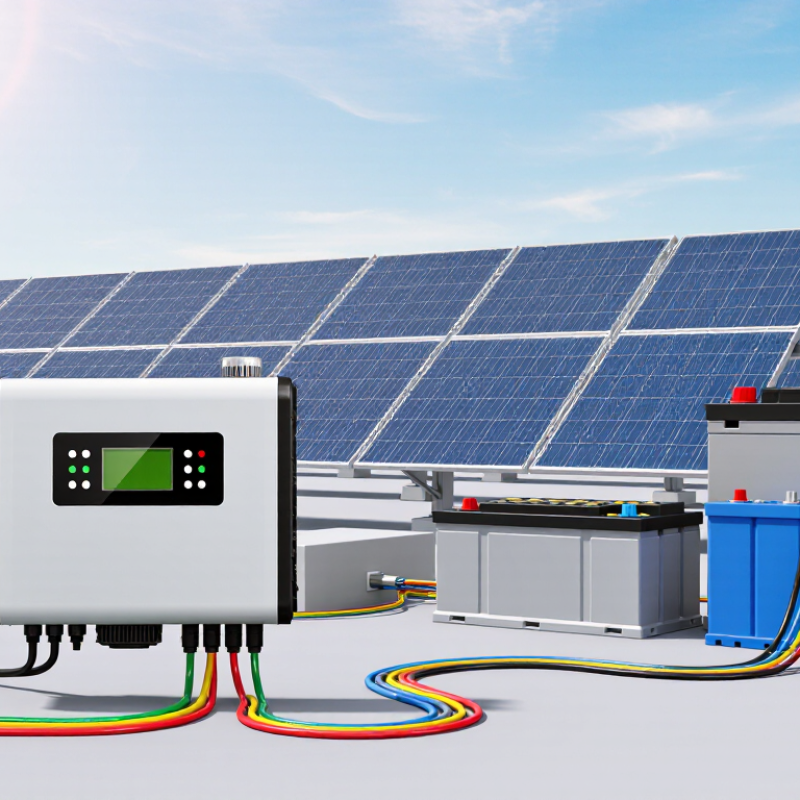
A solar charge controller regulates electricity between panels and batteries. It prevents excessive charging, deep discharge, and harmful voltage spikes. Without it, a sunny afternoon can push unsafe current into a nearly full battery. Heat may rise inside the battery case. Capacity can decline faster.
The controller also matches charging voltage with battery chemistry. Lead-acid batteries need different settings from lithium-based batteries. Modern maximum power point tracking controllers can harvest more energy during weak sunlight. This matters as solar deployment expands. IRENA reported that solar represented 73% of new renewable capacity added globally in 2023. More small systems now depend on accurate charging control. NREL’s Annual Technology Baseline also shows that storage performance varies by battery technology. A controller cannot fix poor wiring, undersized cables, or an aging battery. That is an easy mistake to overlook.
Tips: Check the battery voltage first. Then match the controller’s current rating to the panel array. Leave safety capacity above the expected maximum current. Place the controller near the battery, but keep it cool and dry. Review the manufacturer’s charging profile before installation. If readings seem unusual, stop and test with a calibrated meter. Guessing is cheaper only until something fails.
2026 Best Solar Charge Controller for Batteries: Why Use It?
A solar charge controller manages the unstable voltage between panels and batteries. It measures battery voltage, charging current, temperature, and load demand. Then it adjusts energy flow through staged charging. Bulk charging supplies higher current, absorption holds a controlled voltage, and float charging maintains readiness. This prevents prolonged overcharging, excessive heating, and electrolyte loss in lead-acid batteries. For lithium batteries, correct voltage limits and low-temperature cutoffs are especially important. Small settings matter.
The IRENA Renewable Capacity Statistics 2024 report recorded 345.5 GW of new solar capacity in 2023. Total global solar capacity reached about 1,419 GW. More installations mean more batteries operating in changing weather and temperatures. MPPT controllers can track the panel’s best operating point, especially during cold mornings or partial cloud. Their benefit is not constant. Wiring length, shading, panel voltage, and battery chemistry change the result. A fixed “extra percentage” claim should be questioned.
In practical installations, the controller should match the battery’s charging profile and maximum current. A temperature sensor can reduce charging voltage when lead-acid batteries become hot. A properly configured unit also disconnects loads before deep discharge becomes destructive. I have seen systems fail because the controller was correctly sized but incorrectly programmed. The hardware was not the problem. Battery age, loose terminals, and undersized cables can still cause trouble. A controller cannot repair a neglected battery.
| Evaluation Dimension | Typical Data or Range | How It Regulates Charging | Battery Protection Benefit | Best-Fit Use Case |
|---|---|---|---|---|
| Controller technology | PWM or MPPT | PWM connects the solar array to the battery near battery voltage; MPPT continuously adjusts the operating point to convert excess panel voltage into charging current. | Maintains controlled current and voltage instead of allowing the panel to charge the battery directly. | PWM for simple, closely matched systems; MPPT for higher-voltage arrays, cold climates, long cable runs, or limited roof area. |
| Nominal battery voltage | Common systems: 12 V, 24 V, and 48 V | Detects or is configured for the battery-bank voltage and applies the correct charge profile. | Reduces the risk of overvoltage caused by using an incompatible controller setting. | 12 V for small systems; 24 V for medium systems; 48 V for larger installations where lower current improves cable efficiency. |
| Battery chemistry compatibility | Flooded lead-acid, AGM, gel, and lithium iron phosphate (LiFePO₄) | Uses chemistry-specific absorption, float, equalization, and low-temperature settings where supported. | Prevents unsuitable equalization or float behavior, especially for lithium batteries. | Choose a selectable profile or a programmable controller matched to the battery manufacturer's limits. |
| Bulk-charge stage | Maximum available controlled current until the battery reaches the programmed absorption voltage | The controller supplies available solar current while monitoring battery voltage and temperature when supported. | Limits uncontrolled current and helps prevent excessive heating during the main recharge period. | All battery systems, provided the controller's current rating is not exceeded. |
| Absorption voltage | Typical 12 V lead-acid range: about 14.2–14.8 V; typical 12 V LiFePO₄ range: about 14.0–14.6 V | Holds the battery near a programmed voltage while charging current gradually decreases. | Reduces overcharging and gassing in lead-acid batteries; avoids excessive voltage for lithium batteries when correctly configured. | Use the exact voltage recommended by the battery manufacturer; values vary by model and temperature. |
| Float or standby stage | Typical 12 V lead-acid float range: about 13.2–13.8 V; many LiFePO₄ systems use a low or disabled float setting | Maintains a lower holding voltage after the battery is full, or reduces charging when the selected lithium profile requires it. | Helps prevent prolonged high-voltage stress and electrolyte loss in lead-acid batteries. | Standby applications, backup power, lighting, boats, cabins, and off-grid storage. |
| Equalization control | Optional for some flooded lead-acid batteries; generally disabled for AGM, gel, and lithium batteries unless specifically approved | Raises voltage for a controlled period when the selected battery type permits it. | Prevents accidental high-voltage equalization on batteries that can be damaged by it. | Flooded lead-acid maintenance systems with a manufacturer-approved equalization procedure. |
| Temperature compensation | Commonly available for lead-acid systems; the compensation coefficient is battery-specific | Adjusts charge voltage according to battery temperature measured by a sensor. | Helps reduce undercharging in cold conditions and overcharging in hot conditions. | Lead-acid batteries installed in garages, vehicles, outdoor cabinets, or unconditioned spaces. |
| Maximum charge-current rating | Common ratings include 10 A, 20 A, 30 A, 40 A, 60 A, and higher | Restricts the output current to the controller's rated limit while managing available solar power. | Protects the controller and battery from excessive charging current when the system is correctly sized. | Select a rating above the calculated maximum charging current and follow the permitted PV oversizing rules. |
| PV input voltage range | PWM: usually close to battery voltage; MPPT: often supports substantially higher PV voltage, depending on the model | Converts the permitted solar-array voltage into the battery's required charging voltage. | Prevents damage caused by exceeding the controller's maximum open-circuit PV voltage. | MPPT is generally more flexible for series-connected panels and longer cable distances. |
| Protection functions | Common functions: overcharge, reverse polarity, short circuit, over-temperature, and reverse-current protection | Uses electronic monitoring and automatic shutdown or current reduction when unsafe conditions are detected. | Reduces the likelihood of battery, wiring, and controller damage during faults or abnormal operation. | Essential for unattended, mobile, outdoor, and remote solar installations. |
| Basic sizing calculation | Estimated charge current ≈ PV array watts ÷ battery charging voltage | Uses the estimated maximum output to determine the required controller current rating. | Avoids operating the controller beyond its thermal and electrical limits. | Example: a 400 W array charging a 12 V battery at roughly 14.4 V may produce about 27.8 A before design margins and conversion losses. |
| Why use a solar charge controller? | A dedicated control stage between the solar array and battery | Manages charging stages, voltage, current, temperature response, and load behavior. | Helps prevent overcharging, excessive voltage, overheating, reverse current, and premature battery aging. | Any solar system that charges a rechargeable battery and requires predictable, safer operation. |
A solar charge controller regulates energy between panels and batteries. It prevents overcharging, deep discharge, and unstable voltage. This protection can extend battery life and improve system safety. In practical installations, controller selection should match battery chemistry, voltage, and daily energy demand.
A 12-volt battery needs a compatible controller setting. Small systems often use PWM controllers. They are affordable and suitable for basic lead-acid batteries with stable sunlight.
MPPT controllers harvest more energy during cold mornings, weak sunlight, or long cable runs. They suit larger systems and changing weather better.
Lithium batteries need precise charging limits and communication features in some systems. AGM and gel batteries require different absorption and float settings. Flooded batteries may need temperature compensation and regular ventilation.
I once underestimated cable losses in a small installation. The battery charged, but not efficiently. That mistake showed why calculations matter.
Tips: Check the battery manufacturer’s charging profile before installation. Confirm the controller’s maximum solar voltage and current. Add a temperature sensor when the battery type supports it. Keep cables short, properly sized, and protected from moisture. Review performance after cloudy weeks. A system can look correct while quietly losing energy. When uncertain, consult a qualified solar technician.
How to Choose the Best Solar Charge Controller in 2026
Choosing a solar charge controller starts with the battery, not the panel. Confirm the battery chemistry, nominal voltage, charging limits, and required absorption settings. Lithium batteries need different control logic than lead-acid batteries. A mismatched controller can reduce capacity or create unsafe heat. Check the datasheet carefully. Small details matter.
For most changing weather conditions, MPPT technology usually captures more usable energy than PWM control. This advantage becomes clearer during cool mornings, weak sunlight, or partial shading. Size the controller above the panel’s maximum current, not its average output. Also check the highest panel voltage during cold weather. I have seen systems fail because installers calculated only the summer temperature. That assumption needs more thought. Look for temperature compensation, battery protection, reverse-polarity protection, and reliable overload handling. Clear display data also helps you notice unusual charging behavior early.
Tips: Measure cable length before choosing the controller. Long cables need suitable wire thickness to reduce voltage loss. Keep the controller dry, ventilated, and away from direct heat. Review independent testing, installation records, and electrical safety certifications. Avoid choosing by price alone. A cheap unit may work briefly, then drift from accurate voltage control. If your battery bank may expand, select a controller with enough capacity. However, oversizing without checking panel limits can waste money. Ask a qualified installer when calculations feel uncertain. Safety comes first.
In 2026, a solar charge controller remains essential for safe, efficient battery charging. I install it between the solar array and battery bank, never directly across the load. Before wiring, I check panel voltage, battery chemistry, and controller capacity. The controller must match the battery’s nominal voltage and expected charging current. I also add correctly rated fuses near the battery. Measure twice.
I switch off the solar input and loads before connecting cables. Correct polarity matters; reversed connections can damage equipment quickly. I connect the battery first, then the solar panels, and finally the loads. During configuration, I select the exact battery type and charging profile. Lithium, lead-acid, and other chemistries require different voltage limits. I set temperature compensation only when the battery manufacturer permits it. A multimeter helps verify charging voltage during bright midday conditions.
Maintenance is simple but easily neglected. Every few months, I inspect terminals for looseness, corrosion, and heat discoloration. I remove dust from ventilation openings and keep the controller dry. The battery area needs airflow, especially during charging. I record voltage readings and unusual alarms in a small log. Once, I trusted an old cable without checking it; its warm connector revealed hidden resistance. That mistake changed my routine. I now retighten connections carefully, but I avoid overtightening fragile terminals. If readings remain abnormal, I stop the system and request qualified electrical assistance.
It regulates electricity flowing between solar panels and batteries. It helps prevent overcharging, deep discharge, and damaging voltage spikes. Without control, a sunny afternoon can heat a nearly full battery.
Lead-acid and lithium batteries use different charging limits and profiles. A mismatch can reduce capacity or create unsafe heat. Small settings matter.
MPPT usually captures more usable energy during weak sunlight, cool mornings, or partial shading. PWM may suit simpler, smaller systems. Check the panel and battery specifications before deciding.
Match the controller to the battery voltage and the panel array’s maximum current. Leave safety capacity above the expected peak current. Also check the highest panel voltage during cold weather.
Install it near the battery to reduce cable voltage loss. Keep it dry, cool, ventilated, and away from direct heat. Do not cover its ventilation openings.
Switch off the solar input and loads before wiring. Connect the battery first, then the solar panels, and finally the loads. Check polarity carefully. Reverse connections can damage equipment quickly.
Use correctly rated fuses near the battery. Choose suitable cable thickness, especially for long cable runs. Measure panel voltage and battery voltage before connecting anything. Guessing fails.
Inspect terminals every few months for looseness, corrosion, or dark heat marks. Remove dust from ventilation openings and keep the area dry. Record voltage readings and alarms in a simple log.
Stop the system and test with a calibrated multimeter. Check polarity, cable connections, temperature, and the selected charging profile. An old warm connector may reveal hidden resistance. I once overlooked that.
A solar charge controller is an essential link between solar panels and batteries, managing the flow of electricity to keep charging safe, efficient, and consistent. Why use a solar charge controller with batteries? Without proper regulation, batteries may be overcharged, deeply discharged, overheated, or damaged, reducing their lifespan and reliability. A quality controller monitors voltage and current, adjusts charging stages, and protects the system from reverse current and other common electrical risks.
In 2026, selecting the best solar charge controller depends on the battery chemistry, system voltage, panel output, energy needs, and installation environment. Different controller types suit different applications, from simple small systems to larger setups requiring advanced power tracking. Correct installation, battery settings, wiring, ventilation, and routine inspections are equally important. By choosing a properly sized controller and maintaining it carefully, users can improve battery performance, enhance system safety, and gain more dependable energy storage over time.
